Sunday, December 6, 2009

Christmas at the market Joulumyynti torilla

Nyt on taas harmaata ja maa sula, mutta viime viikolla oli parina päivänä puutarhassa kaunis kuura ja aurinkokin pilkisteli. Vielä pari viikkoa, kunnes on vuoden pimein päivä ja siitä alkaakin sitten valo taas lisääntyä. Joulu on jo lähellä :)

Tänä vuonna emme siis ole vanhan joulumyyjäisissä kuten aiemmin, vaan myymme ainoastaan torilla ja netin kautta. Mieheni on torilla lauantaisin ja parina arkipäivänä, tulevalla viikolla todennäköisesti keskiviikkona 9.12 ja sunnuntaina 13.12, klo 9.30-15 (ellei sääennuste muutu hyvin huonoksi). Hämärä tulee aikaisin, joten toripäiväkin päätty silloin. Minä en tule Helsinkiin varmaan ollenkaan, vaan teen kotona lisää myytävää:)
Tervetuloa torilla lankaostoksille.

In English
Today it is gloomy and warmer again, but last week we had couple of cold days, and the garden was beautiful when it was all frosty, even the sun was peaking, a rarity this time of year. These pictures were taken around 1 pm, and there wasn't very much light even then, and after 3 pm it is getting dark. Still couple of weeks of this until the darkest day of the year, and then the days begin to get longer and there will be more light again:) Christmas is getting close.

This year we didn't get a booth at the Christmas Fair like before, instead we are selling only at the market Kauppatori and from the online shop. My husband will be at the market on Saturdays and next week Wednesday Dec.9th and Sunday Dec.13th (unless the weather changes to very bad), from 9.30am to 3 pm. Darkness comes early so the market closes early, too.
I won't be in Helsinki at all this year, I'll be home making more yarns and mittens to sell:)
Welcome to the market if you are in Helsinki.

Kuuraisia morsinkoja

Frosty woad beds


Tuesday, December 1, 2009

New shop Uusi kauppa

Viime viikolla ilmeni ongelmia nettikauppani sähköpostien kulussa, ja kävi ilmi, että kaupan rakenteessa oli reikä, jonka korjaaminen olisi ollut hankalaa. Niinpä ystäväni, joka tekee sivut meille, ehdotti uuden kaupan perustamista paremmalle pohjalle ja näin myös saatasiin turvallisemman kaupan lisäksi vielä siitä monipuolisempi ja uudempi.
Tämä uusi kauppa aukeaa ihan kohta! Tästä pääsee uuteen kauppaan, vielä tulee hiukan muutoksia, mutta pääsette jo katselemaan:)
Kauppa on nyt myös suomenkielellä englannin lisäksi, varmaan mukava uudistus suomalaisille:) Kauppa myös laskee postikulut automaattisesti ja enää minun ei tarvitse lähettää ennakkolaskua käsin, vaan kassalla lopuksi asiakas saa valita joko pankkisiirron tai postiennakkomaksun välillä. Edelleen tietysti voi hakea varatut tuotteet torilta ja niin säästyä postikuluilta.
Ainoa harmillinen puoli on, että asiakkaat joutuvat rekisteröitymään uudelleen, kaikki vanhat asiakastiedot katoavat, kun vanha kauppa hävitetään. Olen pahoillani tästä, mutta toivottavasti uusi kauppa korvaa muuten vaivan. Ja kiitos kärsivällisyydestä teille lukijoille ja asiakkaille ja Jannelle kaupan tekemisestä.

Aikamoinen homma on ollut uuden kaupan perustamisessa, ja vieläkin siellä on pieniä puutteita tuotteiden tiedoissa, mutta kaikki myytävät langat ym ovat nyt siellä kuitenkin ja kun tämä on saatu tehtyä, pääsen värjäämään lisää.. jotain uusia lankoja onkin jo värjätty viime viikolla, mutta ne on vielä selvittämättä ja vyyhdittämättä uudelleen:)
Kaiken muun ohella olen neulonut uusia sini-harmaa/ruskea sävyisiä lapasia, ekasta parista ei tullut ihan sellainen kuin halusin, eikä toisestakaan, mutta nyt kolmansista tulee varmaan hyvät. Ensimmäinen versio oli viime lauantaina torilla ja ne löysivät kyllä ehti uudet omistajat, joten ehkä nekin olivat ihan kivat. Eli lähtitulevaisuudessa on sitten myös uusi lapasmalli tulossa, ehkäpä ensi viikolla.

In English
Last week we had trouble with the emails in our shop, and it turned out that there was a failure in the structure of the shop, so my friend who knows more than I do about these kind of things, suggested that we put up a new and better shop. And so we have been doing.
Here you can go and see our new shop, there will be some changes yet, but at least you can go and take a look:)
There are several improvements, the shop is now also in Finnish, which I'm sure the finnish-speaking appreciate:) The shop also adds the shipping cost to your shopping cart automatically, so you see immediately how much the shipping is going to cost. There is also an option to pay directly to our bank account, for Finns and within EU it is a good option, but of course you can pay through Paypal like before. I will still have to write the invoices by hand and send them to you, but I hope that we'll get you an option to go straight to the Paypal site also, after Christmas, at the latest (this could be done right right now, but I have to dye and make more things for the Christmas to sell, so I have more time for that change later).
The only inconvenience is that you will have to register again when you buy, all the old customer records will be destroyed with the old shop. I'm sorry about that, but I hope the new shop will make up to it in other ways. Thank you for your patience, and thanks also Janne, for putting up the new shop.

The new shop has been a lot of work, it has taken almost all my time in the last week, but soon I can get back to my dye pots and will have more new yarns.. actually I have some yarns already dyed before this shop thing, they are just waiting to be reskeined. I have also knitted a new pair of mittens, with blue/grey/brown coloring, but the first pair wasn't exactly how I thought they would be, so I knitted another pair, slightly different, and now I think the right ones would be in-between these two.. so I will have to knit yet another pair:) DH had the first pair at the market last Saturday, and sold them right away.. so I quess they were not so bad after all:)
Anyway, I will have a new mitten pattern and kit perhaps next week.

Tuesday, November 24, 2009

Wrong email Roskapostia

Pari asiakastamme on ilmoittanut tänään saaneensa sähköpostia osoitteesta joka loppuu riihivilla.com. Tämä viesti ei ole tullut meiltä, poistakaa se avamatta. Selvitämme asiaa ja olen pahoillani!

In English
Couple of our clients have written to me today that they have recieved email from an address that ends with riihivilla.com. This email has not come from us, delete it without opening.
I am sorry, we are trying to find out how this has happened.

Saturday, November 21, 2009

Chinese Woad Kiinalainen morsinko

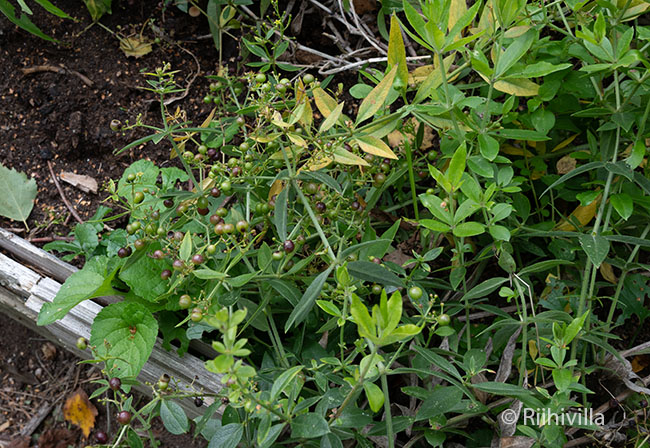
On ollut niin harmaata ja sateista, että pitää laittaa hiukan kesäisiä kuvia. En ole vielä kirjoittanut kiinalaisista morsingoistani (Isatis indigotica) ja miten ne kasvoivat. Ne oli kylvetty huhtikuussa samaan aikaan kasvihuoneeseen kuin tavalliset morsingotkin, tässä postauksessa taimivaiheestä, ja sitten kesäkuun alussa taimet oli istutettu ulos. Viikko istutuksen jälkeen oli tosi kylmä hallayö, mutta taimet eivät näyttäneen kärsineen siitä.. seuraukset näkyivät sitten myöhemmin. Yläkuvassa kiinalaiset morsingot ovat noita harmahtavalehtisiä, tavalliset morsingot näkyvät taustalla vihreämpinä.

In English
It has been so grey and rainy lately that looking at pictures from summer make me feel instantly more cheerful. I haven't yet written a lot about my Chinese woad (Isatis indigotica) and how they grew last summer. I had sown them in the greenhouse in April, like the ordinary woad, in this posting more about that, and then transplanted them outside in the beginning of June. A week after the transplanting, we had a really cold night (-7C), but the plants didn't get damaged.. or rather I found out the consequenses later. In the picture above the chinese woad is the one with bluish green leaves, the leaves of the ordinary woad are brighter green in the background.

Tässä kiinalaiset morsingot kesäkuun puolessavälissä.

Above the chinese woad in the mid June.

Ja tässä yläkuvassa kuukautta myöhemmin, heinäkuun puolessavälissä. Lehtien muoto ja väri ovat hyvin tyypillisen näköisiä.

And above they are a month later, in the mid July. The color and the shape of the leaves is very typical looking in this picture.

Kiinalaisista morsingoista olisi voinut ja varmasti kannattanutkin kerätä satoa jo heinäkun lopulla, mutta en raaskinut ottaa niitä vielä tässä vaiheessa, kun harjoittelin indigon uuttamista tavallisista morsingoista. Elokuun puolessa välissä monet taimista työnsivät jo kukkavartta, vaikka yleensä näiden pitäisi kukkia vasta toisena vuotenaan. Tämä johtui todennäköisesti juuri tuosta alkukesän hallayöstä, lisäksi koko kesäkuun alku oli hyvin viileä. Tavallisista morsingoista ei yhdessäkään ollut kukkavartta ja luinkin sitten, että tämä on tyypillistä kiinalaiselle morsingolle: jo alle 5C olevat lämpötilat voivat virittää ne kukkimaan riippumatta siitä, missä kasvun vaiheessa ne ovat, kun taas morsingolla kasvun pitää olla pidemmällä ("rosette stage"), jotta kukinta virittyy. Kukkivista kasveista lakkaa lehtien muodostuminen ja toisaalta indigopitoisuus häviää, käsittääkseni, en kylläkään kokeillut värjätä kukkivilla kasveilla.
Tämä pitää muista ensi vuonna, ja ensinnäkin istuttaa taimet ulos vasta kun varmasti ei ole halloja ja toiseksi kasvuharso taimen päällä voisi auttaa myös.

In English
I should have harvested the first leaves from my chinese woad in July, but I was busy experimenting the extraction of indigo from woad. By the mid August many of my chinese woad plants had started to grow flower stems, although they shouldn't do it until the second year of growth. This was most likely the result of the cold night in June, and on top of that one cold night, the temperature in all beginning of June was quite low. None of the ordinary woad plants had started to flower prematurely, and I later read that this is typical for the chinese woad: temperatures lower than 5C induce flowering in chinese woad in any stage of growth, while Isatis tinctoria needs to be in the rosette stage to be induced to flowering. When the plants start to flower, they stop growing new leaves and the indigo content is smaller, to my understanding.. although I didn't try dyeing with the flowering chinese woad. I will have to remember next sumemr not to plant the chinese woad outside until after the frosts and I think covering them with horticultural fleece would also be good for them, if the weather is cool.

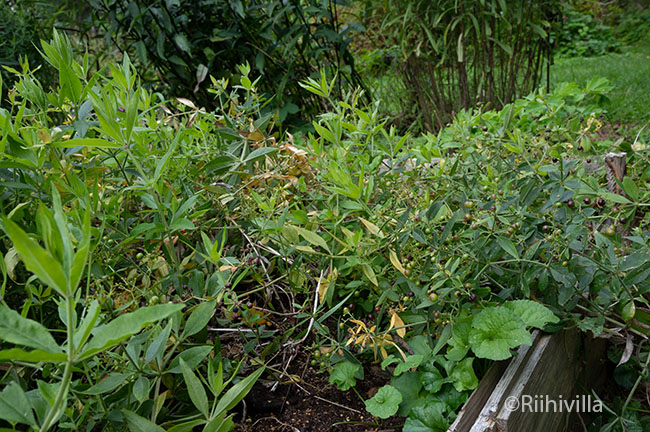
Toinen huomattava asia kiinalaisen morsingon kasvatuksessa on, että se selvästikin on arempi hyönteisviotuksille kuin tavallinen morsinko. Morsinko ja kiinalainen morsinko kuuluvat kaalikasveihin ja voivat saada kaalien tuholaisia, tai ainakin kiinalainen morsinko saa niitä, itse asiassa tavalliset morsinkoni olivat koko kasvukauden ajan kauniita ja virheettömiä (kuva alla), kun taas aivan vieressä kasvavat kiinalaiset morsingot olivat elokuun puolessa välissä täynnä hyönteisten tekemiä reikiä, myös etanat söivät niitä toisin kuin morsinkoa! Kuvista näkee, miten paljon rähjäisemmän näköisiä kiinalaiset morsingot olivat tavallisiin verrattuna. Jos olisin kerännyt lehdet viimeistään elokuun alussa, ehkä uudet lehdet olisivat olleet jälleen parempia, ja varmaankin harson käyttö olisi estänyt ainakin kaaliperhosten tuhot.

In English
Another thing I notice that the chinese woad is much more susceptible to pests that ordinary woad. They both belong to cabbage-family and can get the same pests as cabbage, or at least the chinese woad can get them! In fact the ordinary woad growing right beside the chinese woad was beautiful and flawless all growing season, as you can see in the picture below. No signs of insect damage at all, and compare it to the picture of the chinese woad above, full if holes and damage! Also slugs ate chinese woad but didn't touch the ordinary woad for some reason.
If I had harvested the leaves in the beginning of August, perhaps the new leaves had been better.. also use of the fleece could have helped.
Joka tapauksessa keräsin lehdet kukkimattomista kiinalaisista morsingoista ja uutin indigon niistä samaan tapaan kuin morsingostakin, ohje täällä. Ensimmäisessä keruussa lehtiä tuli 1,8kg ja sain värjättyä sillä 600g kuvassa olevaa tumminta sinistä, ja toiset 600g keskimmäistä, mutta kolmannesta väristä (300g) tulikin yllättävää kyllä aika vaalea, suurin osa sinisestä oli tarttunut ensimmäisissä värjäyksissä. Yhteensä siis sain värjättyä 1,2kg aika voimakkaan väristä lankaa 1,8kg:lla eli selvästi enemmän suhteessa tummempaa kuin vastaavalla määrällä tavallista morsinkoa. Samanlaiseen tulokseen oli Helen tullut blogissaan pari vuotta sitten ja täällä on tiivistelmä italialaisesta tutkimuksesta, jossa on verrattu morsingon ja kiinalaisen morsingon väriainepitoisuuksia jälkimmäisen eduksi.
Toisaalta kiinalainen morsinko ei tuottanut niin paljon lehtisatoa kuin tavallinen ja sen viljelyssä tuntui muutenkin olevan enemmän ongelmia. Pienessä puutarhassa kuitenkin se ehkä pitää paikkansa, koska siitä saa voimakkaampaa väriä pienemmästä määrästä lehtiä. Ainakin minä aion kasvattaa sitä vielä ensi vuonna, ja yritän välttää virheitä, mitä tein nyt:)

In English
Anyway, I harvested the good leaves from the chinese woad and extracted the same way as from woad, the recipe is here. From the first harvest I got 1,8kg leaves, and with them I dyed 600 grams of the darkest blue (two dips)in the picture below, then another 600 grams of the middle blue (two dips) and finally 300grams of the lightest blue (two dips). The third color was surprisingly light, it seems most of the color went to the first two dyeings. So I got 1,2 kg of quite good blues from 1,8kg of leaves, and that is more (of the darker color) than what I got from the same amount of woad leaves. Helen had come to the same kind of conclusion in her experiments with chinese woad, here, and here is an abstract of an italian article about the differences in leaf yield and indigo precursors in woad and chinese woad, also in favor of the latter.
On the other hand, there seemed to be more difficulties in growing the chinese woad and it didn't yield so much leaves than ordinary woad, so on a large scale woad would seem easier (at least in Finland), but perhaps in a small garden it would be worthwhile to grow because you can get darker blue from a smaller amount of leaves. At least I will try growing it again next year, and try to learn from the mistakes I made now:)

Saturday, November 14, 2009

Cloudberry Mittens Hilla lapaset

Tässä uusi lapasmalli, nimeltään Hilla. Sen lisäksi, että se on yksi lempimarjoistani, joita pitää joka talveksi saada pakastimeen, niin näitä lapasia oli mukava neuloakin:)
Hilla-kuvion on äitini Liisa Rajala tehnyt meille jo 90-luvun alussa, ja nyt muokkasin hiukan mallia ja muutamien koelapasten tekemisen jälkeen tämä väriyhdistelmä oli mieheni ja minun mielestä se oikea. Väreinä on samettijalalla värjättyjä vihreitä, luonnonvalkoista ja beigeä sekä verihelttaseitikkioranssia ja toisena oranssina tammenkuorilla puretettua krapilla saatua väriä.
Tarvikepaketti Hilla-lapasiin löytyy kaupastani.

In English
Here I have a pair of new mittens, the design is called Cloudberry. Cloudberries are one of my favourite berries, I always need to have them in the freezer for winter treats.. and these mittens were a pleaseure to knit, too:)
My mother Liisa Rajala had designed the pattern of cloudberries already in the beginning of the 90s, and now I modified the mittens a little, and after making couple of test mittens this color combination was the one to DH and me. The colors are natural white and beige, two greens dyed with mushrooms Tapinella atrotomentosa and one orange dyed with mushroom Cortinarius semisanguineus and the other was dyed with madder on oak bark mordanted yarn.
You can find a kit for Cloudberry mittens in my shop.

Friday, October 30, 2009

Woad once more Vielä morsingosta

Värjäsin vielä eilen viimeisilla morsingon lehdillä, tänä aamuna olikin sitten maa jo ihan kuurassa ja pinnasta jäässä viime yön pakkasen jäljiltä.
Lokakuun alussa oli ainakin viikon verran hallaöitä, morsingot oli peitetty harsolla, mutta kyllä ne silti saivat silloin pakkasta ja kasvu lakkasi. Olin suurimmasta osasta kerännyt lehtiä jo kahteen kertaan, mutta ne olivat kasvaneet syyskuussa vielä lisää ja halusin ottaa kaikki lehdet talteen. Sain kerättyä vielä 5,5 kg lehtiä, kaksi täyttä ämpärillistä, ja ihme kyllä lehdet olivat aivan hyviä, vain joitain mustuneita ja löllöksi menneitä oli joukossa.
Uutin lehdet tavalliseen tapaani, ja liemi näytti ihan lupaavalta, sinistä vaahtoa jne.
Ensimmäisestä väristä tuli keskisinistä ja toisesta kaunista vaaleansinistä kahdella dippauksella molemmat ja sain tuosta määrästä lehtiä värjättyä yhteensä 1,5kg sinistä, varmaan vieläkin olisi tullut hyvin vaaleaa, mutta pimeä iski päälle. Eli vielä näinkin myöhään syksyllä lehtiä kannattaa kerätä:)

Omia morsingon taimia minulla oli yhtensä n 50 ja niistä sain kerättyä lehtiä kesän ja syksyn mittaan n 17kg eli n330g/taimi, tietysti useammassa erässä kerättynä. On mukava laskea näin kauden loputtua, paljonko satoa sainkaan, tosin kaikki uutokset eivät onnistuneet, mutta ensi vuonna olen nyt taas vähän viisaampi:)
Taimissa oli eroja, toiset olivat rehevämpiä kuin toiset, mutta keskimäärin minusta hyvä sato ja on kiva tietää ensi vuotta ajatellen, mitä odottaa:) Morsingot olivat siis kohopenkissä ja ne olivat saaneet aika paljon lampaanlantakompostia keväällä, nillä oli olkikate, joten kosteus pysyi hyvin maassa, ja yhtään kertaa en kastellut niitä istutuskastelun jälkeen.

In English
I dyed with the last leaves of woad yesterday, which was good because this morning the ground was frozen, last night was very cold (-8C and all day today the temperature was near freezing, so it seems the winter is coming.
In the beginning of October we had frosty nights for a week, then the weather became a little warmer again, and since I had covered my woad with horticultural fleece, it didn't dye from cold:)
I had harvested my woad twice already, but the leaves had grown back and I wanted to use all the leaves once more. I managed to collect 5,5 kilos of good leaves, two full buckets. Some leaves had gone black, but most were still very good looking.
I extracted the indigo from them the way I did earlier and the bath looked promising, blue foam and everything. The first yarns were medium blue and the second yarns nice babyblue (two dips both), total of 1,5kilos of yarn, and I think I might have gotten even the third color but it became dark and I had to stop. So, now I know that you can harvest the leaves even this late in the autumn:)

I had about 50 plants of my own woad, and I harvested about 1,7kilos of leaves from them during the summer and autumn, about 330grams/plant. There were differences in plants, some were more robust than others but on average I was very pleased with the crop. I like looking back and seeing how much leaves I got, of course all the extractions didn't yield much blue, but next year I know better how to do it and it is nice to know what to expect next summer.
These plants grew in raised beds, which got plenty of compost made from sheep manure in the spring. The beds were covered with straw to keep the moisture, so I didn't have to water them at all during the summer, besides right after planting.

Sunday, October 25, 2009

Goldenrod dyeing Piiskuvärjäyksiä

Olen värjännyt lokakuussa paljon piiskuilla keltaista morsinko- tai väritatarsinisen päälle ja saanut hyviä vihreitä. Yläkuvassa on matala jo alkusyksystä kukkiva tarhapiisku, joka ei ole suostunut leviämään.. ainakaan vielä, mutta onneksi on sitten myös kanadanpiiskuja, jotka ovat isoja ja leviäviä ja tuottavat kovasti satoa:)

Olen kerännyt latvasta lähtien noin kolmanneksen eli siis myös vartta ja lehtiä kukinnon lisäksi. Vaikka väristä voisi ehkä tulla heleämpi pelkillä kukilla värjätessä, uskon tässäkin asiassa Erik Sundströmin kirjaa, jossa sanotaan, että väristä tulee yleensä pysyvämpi, jos mukana on lehtiä. Olisi mielenkiintoista tietää miten väriaineet eroavat kukissa ja lehdissä... En ole löytänyt (toistaiseksi) tarkkaa tietoa tästä, enkä ole itsekään kokeillut värin kestoa pelkillä kukilla värjättynä verrattuna siihen jos myös lehtiä on mukana. Viime vuonna olin kirjoittanut piiskuvärjäyksistä täällä.

Minulla on ollut käytäntönä antaa tuoreidenkin piiskujen seisoa vedessä pari päivää, niin että liemi alkaa hiukan käydä, ennenkuin kuumennan liemen. En keitä sitä kovalla tulella, vaan juuri ja juuri kiehuen tunnin verran, ei siis pitkään. En myöskään anna yleensä lankojen olla piiskujen väriliemessä tuntia pidempään, jos lämpötila on 80C, viileämmässä langat voivat olla kauemmin, huoneenlämmössä jopa päiviä.

In English
I have dyed a lot with goldenrods lately, yellow on top of the blues I have dyed with woad or japanese indigo. The top picture is of a smaller and earlier flowering Solidago hybrid which hasn't spread at all .. at least not yet. Luckily I have also Canadian goldenrods, which are taller and very fast spreading and they produce a lot of dyestuff:)

I have harvested about third of the plant from the top, also a little leaves and stems besides the flowers. The color could be brighter when dyeing with only flowers, but I believe what Swedish Erik Sundströms dyebook says: the color is more fast when there are leaves and stems also in the bath with flowers. It would be intersting to know what the exact dyestuffs are in the flowers compared to the dyestuffs in the leaves. I haven't found information about this (so far) and I haven't done any comparative tests myself either regarding to the lightfastness.
Last year I wrote about goldenrod here.

I have let even the fresh plant parts ferment for a few days before heating the bath, and I only simmer them then for one hour, no hard boiling. After straining the bath, I simmer the pre mordanted yarn for one hour and don't let them cool in the bath, like I usually do with other dyes. If the temperature is cooler in dyeing, then the time can also be longer, in room temperature even days.
Yllä neulottu näyte, millaista alapuolella olevasta langasta tulee. Tämä on värjätty väritattarella ja kanadanpiiskuilla ja sen numero on kaupassa 2527.

Above there is a knitted sample of the semisolid yarn below. It is dyed with japanese indigo and canadian goldenrod and the number of it in the shop is 2527

Erilaisia vihreitä saa muuttelemalla enimmäkseen sinisen voimakkuutta, ja osin myös keltaisen, tosin en kovin paljoa käytä jälkivärejä keltaisista, niiden valonkesto ei ole niin hyvä kuin ensimmäisen värin.

Different greens are dyed by mostly using different strength of blue as a base. Also the shade of yellow is important, but I mainly use the first baths from yellows, the lightfastness of afterbaths is not so good as that of the first bath.